
Latest Products



Contact Us
- Gujiabu, Hujie Village, Zhangting Town, Yuyao City
- kiccy@yytonghui.com
- +8615267877473
The factory was established in 1989, and started to do export trade in 2010, mainly in Europe and the United States market.
The factory can design products and process them according to customers, our advantage is that we can do customized products according to customers' drawings and provide free samples. High quality products, no burrs, smooth surface, galvanized products all pass salt spray test.
Why Choose Us?
High quality: We take pride in the craftsmanship of our products and ensure that each one meets our strict standards for quality. High quality products, no burrs, smooth surface, galvanized products all pass salt spray test.
Professional Team: The factory was established in 1989, and started to do export trade in 2010. Dedicated to strict quality control and attentive customer service, our experienced staff is always available to discuss your requirements and ensure complete customer satisfaction.
High quality service: Professional and thoughtful after -sales team, let you worry about us after -sales Intimate service, strong after -sales team support.
Custom service: We can do customized products according to customers' drawings and provide free samples.
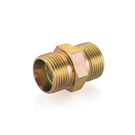
 Carbon Steel Metric Hydraulic Bulkhead
Size: Metric. Threaded size can be customized. Material: carbon steel. Material can be stainless steel 304,316,316L. Surface treatment: Eco-friendly galvanized
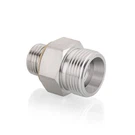
Add to Inquiry Metric Hydraulic Bulkhead Fittings
Size: Metric. Threaded size can be customized. Material: carbon steel. Material can be stainless steel 304,316,316L. Surface treatment: Eco-friendly galvanized
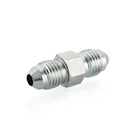
Add to Inquiry Carbon Steel JIC Hydraulic Bulkhead
Size: JIC 9/16”X18. Threaded size can be customized. Material: carbon steel. Material can be stainless steel 304,316,316L. Surface treatment: Eco-friendly galvanized
Add to Inquiry Stainless Steel NPT Hydraulic Bulkhead
Size: NPT3/4. Threaded size can be customized. Material: stainless steel. Material can be stainless steel 304,316,316L. Perfect surface: smooth, no burrs , corrosion test can reach 48-96 hours.
Add to Inquiry NPT Hydraulic Bulkhead Fitting
Size: NPT3/4. Threaded size can be customized. Material: stainless steel. Material can be stainless steel 304,316,316L. Perfect surface: smooth, no burrs , corrosion test can reach 48-96 hours.
Add to Inquiry 1/4 Hydraulic Bulkhead Fitting
Size: BSP 1/4. Threaded size can be customized. Material: carbon steel. Material can be stainless steel 304,316,316L. Surface treatment: Eco-friendly galvanized
Add to Inquiry 1/ 2 Hydraulic Bulkhead Fitting
Size: BSP 1/2. Threaded size can be customized. Material: carbon steel. Material can be stainless steel 304,316,316L. Surface treatment: Eco-friendly galvanized
Add to Inquiry 1/2 NPT Hydraulic Bulkhead Fitting
Size: NPT 1/2. Threaded size can be customized. Material: carbon steel. Material can be stainless steel 304,316,316L. Surface treatment: Eco-friendly galvanized
Add to Inquiry 3 /8 Hydraulic Bulkhead Fitting
Size: NPT 3/8. Threaded size can be customized. Material: carbon steel. Material can be stainless steel 304,316,316L. Surface treatment: Eco-friendly galvanized
Add to Inquiry High Pressure Hydraulic Bulkhead Fittings
Size: M12X1.5. Threaded size can be customized. Material: carbon steel. Material can be stainless steel 304,316,316L. Surface treatment: Eco-friendly galvanized
Add to Inquiry Hydraulic Bulkhead Compression Tube Fittings
Size: M12X1.5. Threaded size can be customized. Material: carbon steel. Material can be stainless steel 304,316,316L. Surface treatment: Eco-friendly galvanized
Add to Inquiry Hydraulic Bulkhead Union
Size: M12X1.5. Threaded size can be customized. Material: carbon steel. Material can be stainless steel 304,316,316L. Surface treatment: Eco-friendly galvanized
Add to Inquiry

Hydraulic bulkheads are specially designed fittings meant to allow free flow of liquids in tank, drum drainage and other plumbing connections. These fittings are also used as distribution outlets in a piping system. Hydraulic bulkheads provide full flow of water and they are also used to attach flexible pipes with the help of male adapters.
These fittings usually have left handed threads, which help to keep the fitting intact and tight while installing the male adapter. When used with unions, hydraulic bulkheads facilitate the removal of pumps and accessories. Hydraulic bulkheads also come with nuts and gaskets as accessories.
What Are the Benefits of Using Hydraulic Bulkheads
Some benefits of using hydraulic bulkheads include:
Increased strength: Hydraulic bulkheads are made from medium carbon steel and are heat treated to increase their strength, making them suitable for use in applications where a higher level of strength is required.
Durability: Hydraulic bulkheads are resistant to wear and tear, making them suitable for use in applications where the fasteners will be subjected to repeated loading and unloading.
Corrosion resistance: Hydraulic bulkheads are coated with a protective finish to help prevent corrosion, making them suitable for use in outdoor or high-moisture environments.
Good price-to-strength ratio: Hydraulic bulkheads offer a good balance between strength and cost, making them a popular choice in a wide range of applications.
Types of Hydraulic Bulkheads
Standard hydraulic bulkheads
Standard hydraulic bulkheads provide a versatile solution for creating connections through solid barriers. They typically consist of a body, lock nut or compression ring, o-ring or gasket, and nut and ferrule. These fittings offer ease of installation and provide reliable sealing.
Locknut hydraulic bulkheads
Locknut hydraulic bulkheads utilize a locknut mechanism to create a secure connection. The locknut ensures proper compression and sealing of the fitting against the barrier, making it suitable for applications with high vibration or external forces.
Compression hydraulic bulkheads
Compression hydraulic bulkheads employ compression rings to create a tight and leak-free connection. They are often used when connecting hydraulic hoses or pipes through solid barriers, offering reliability and ease of assembly.
Flanged hydraulic bulkheads
Flanged hydraulic bulkheads feature a flange that provides a robust connection. This type of fitting is commonly used in applications that require high-pressure sealing or where frequent disconnection and reconnection are required. Flanged hydraulic bulkheads offer durability and convenience.
Many customers are confused by how hydraulic bulkheads are sized. The two many dimensions that they need to know are the internal thread size and the hole size.
● The internal thread is what the fitting is called out by.
● The hole size is the diameter of the external threads. It would help if you had this because that is the hole you will need to cut out of your tank. The hole sizes for most of our bulkheads can be seen by clicking here.
Please note that the male thread is not designed to have anything other than the nut connected to it. It is usually never a standard-size thread.
The only way to connect something to this is to use the internal female threads.
The nut should go on the outside of the tank.
The gasket goes inside the tank for fittings with one gasket. For fittings with two gaskets, one goes inside, and one goes outside.

● Corrosion resistance and chemical compatibility with a wide range of chemicals
● Flow characteristics that are clearly defined and repeatable
● Many typical plumbing connections are compatible.
● Construction is tough and long-lasting.
● Frequently found in leak detection and flow measurement equipment.
● Bulkhead connector is ideal for general-purpose and single-use applications to connect tubing with the rest of the system.
How to Install Hydraulic Bulkheads
The steps for installing hydraulic bulkheads are as follows:
● Hole drilling: To put in a hydraulic bulkhead, first cut or bore a hole at rock bottom of the tank or reservoir to which the pipes are often attached. Make certain you weigh and choose the size of the bulkhead's exterior, so you recognize how big to drill the opening.
● Hydraulic bulkhead: After drilling the opening, install the hydraulic bulkhead with the threads inside or outside the tank or reservoir, counting on how you would like the connections to figure.
● Gasket and locknut fittings: Finally, install the gasket.
Use one gasket on either side of the walls if you've got two. Thread the locknut down by applying pressure to the gasket together with your palm. The locknut would then have a solid-liquid seal with no leaks. But take care to not over-tighten to avoid breaking or distorting the gasket and causing a leak.
Materials for Hydraulic Bulkheads
Hydraulic bulkheads are used in a variety of industries and applications, and the choice of materials for these fittings depends on factors such as the type of fluid being conveyed, the operating conditions, and the compatibility with the surrounding environment. Here are some common materials used for hydraulic bulkheads:
Brass hydraulic bulkheads:
Brass hydraulic bulkheads are corrosion-resistant and well-suited for applications involving water, air, and non-aggressive chemicals. They are commonly used in plumbing and pneumatic systems.
Stainless Steel hydraulic bulkheads:
Stainless steel hydraulic bulkheads are highly corrosion-resistant and suitable for a wide range of fluids, including corrosive chemicals and high-temperature liquids. They are often used in industrial and marine applications.
Aluminum hydraulic bulkheads:
Aluminum hydraulic bulkheads are lightweight and corrosion-resistant, making them a good choice for applications where weight is a concern, such as in the automotive and aerospace industries.
Plastic hydraulic bulkheads:
Plastic hydraulic bulkheads, typically made from materials like PVC, CPVC, or polypropylene, are lightweight and resistant to corrosion. They are commonly used in applications involving water, acids, and certain chemicals. They are often used in aquariums, water treatment, and chemical handling.
Nylon hydraulic bulkheads:
Nylon hydraulic bulkheads are lightweight, durable, and resistant to many chemicals. They are commonly used in fluid systems where chemical resistance and non-corrosiveness are important.
PVDF (Polyvinylidene Fluoride) hydraulic bulkheads:
PVDF hydraulic bulkheads are known for their excellent chemical resistance, especially to highly corrosive chemicals. They are often used in chemical processing and semiconductor manufacturing.
Copper hydraulic bulkheads:
Copper hydraulic bulkheads are used in specific applications where the advantages of copper, such as excellent thermal conductivity, are required. They are more commonly used in plumbing systems.
Bronze hydraulic bulkheads:
Bronze hydraulic bulkheads are known for their strength and corrosion resistance. They are used in marine applications, such as boat plumbing, where exposure to saltwater is a concern.
Nickel-Plated Brass hydraulic bulkheads:
Nickel-plated brass hydraulic bulkheads combine the corrosion resistance of brass with the added protection of a nickel coating. They are often used in environments where both corrosion resistance and aesthetics are important.
Hastelloy hydraulic bulkheads:
Hastelloy hydraulic bulkheads are used in extremely corrosive environments, including those with high concentrations of acids and chemicals. They are commonly used in chemical processing and the oil and gas industry.
● Never connect, disconnect or remake a fitting with pressure in the system.
● Make sure all fittings are properly installed.
● It is not recommended to go beyond the pressure rating of the tubing. Elongation could occur in the tubing, shrinking the wall thickness and cause potential harm.
● For proper sealing it is recommended that the tubing and fittings be of like material.
● Always use proper thread lubricant and sealants on tapered pipe threads.
● Never bleed a system by loosening a fitting.
Metal is constantly up against the threat of corrosion. When corrosive materials, such as salt, grime, moisture, or chemicals, combine with the iron in metal, it can cause oxidation. The result is iron-oxide, or rust. Rust breaks down metal and puts pipes in danger of collapsing or bursting.
During the galvanizing process, you protect metal by adding a layer of zinc. This zinc reinforcement protects metals in two ways:
It provides a layer between vulnerable iron and corrosive elements.
It protects against galvanic corrosion. Zinc has relatively anodic properties compared to most metals. As an anode, it is quick to give up electrons when it comes in contact with a more noble metal. This sacrifice is handy when that noble metal would otherwise be stealing electrons from carbon steel or another basic metal.
What Are the Methods of Hydraulic Bulkhead
There are four ways in which hydraulic bulkhead can be galvanized, each affecting the type of layer formed and the final application. The four methods are described below:
Galvannealing is the combination of hot-dip galvanizing and annealing processes to produce a specialized coating on hydraulic bulkhead . The finished product is a zinc-iron alloy product, with a dull matte surface finish that is ideally suited for paint adhesion. This process works by hot-dipping the base metal, and then heating it in an annealing oven at a temperature of roughly 565 ºC to induce alloying between the hydraulic bulkhead and molten zinc coating. Examples of galvannealing include: Welding operations, marine applications, and any high-tensile stress applications.
Hot-dip galvanizing is a form of zinc coating applied to hydraulic bulkhead (or manufactured hydraulic bulkhead items). This occurs by passing the hydraulic bulkhead objects through a bath of molten zinc and then cooling them. The zinc bonds to the iron within the hydraulic bulkhead. Hot-dip galvanizing works by forming a protective layer on either side of the metal to protect the finished product from corrosion. Galvanized hydraulic bulkhead does not require any secondary or additional coating or painting. Examples of hot-dip galvanizing include: Industrial flooring, motorway guardrails, brackets, and fixings.
Electrogalvanization is a process in which hydraulic bulkhead is galvanized with a zinc coating using electroplating. Hydraulic bulkhead is submerged in a zinc salt solution and an electrical current is applied to create electrogalvanized hydraulic bulkhead. The current creates a reaction between the zinc salt and the surface of the hydraulic bulkhead, leaving behind a thin layer of zinc. This zinc laver is much thinner than the hot dipping method.
The pre-galvanizing process, also referred to as mill galvanization, is performed at the very initial stages of production on metals which are likely to have a limited number of processes after pre-galvanization. This is because carrying out any process on galvanized hydraulic bulkhead will result in the exposure of bare metal to the atmosphere increasing the risk of oxidation. Components that are pre-galvanized are usually hydraulic bulkhead plates and bars. This method enables galvanizing to be done quickly and efficiently on a larger scale than is possible with traditional hot-dipping. This process works by rolling the sheet metal (or other shaped hydraulic bulkhead stock) in a cleaning agent to prepare the material to be passed through the molten zinc, which is then rapidly recoiled. Pre-galvanizing is primarily used for materials that already have a specific shape before being cut.
FAQ
Q: What is the function of hydraulic bulkhead?
Q: What is hydraulic bulkhead?
These fittings usually have left handed threads, which help to keep the fitting intact and tight while installing the male adapter. When used with unions, hydraulic bulkheads facilitate the removal of pumps and accessories. Hydraulic bulkheads also come with nuts and gaskets as accessories.
Q: How to install a hydraulic bulkhead with no access to the inside of the tank?
Q: Where are hydraulic bulkheads used?
Q: How do you size a hydraulic bulkhead?
The hole size is the diameter of the external threads. It would help if you had this because that is the hole you will need to cut out of your tank.
Q: What is the most common hydraulic bulkhead?
Q: What does a hydraulic bulkhead require to secure it?
Q: How to connect hydraulic bulkhead?
Q: How do you use a hydraulic bulkhead?
Q: Where does the gasket go on a hydraulic bulkhead?
Q: How do I know if my hydraulic bulkheads are JIC?
Q: How do I identify a hydraulic bulkhead?
Q: How tight should hydraulic fittings be?
Q: What hydraulic fitting do I need?
Q: Should you use thread tape on hydraulic fittings?
Q: How do you seal a hydraulic bulkhead?
Q: What are the benefits of using hydraulic bulkheads?
Increased strength: Hydraulic bulkheads are made from medium carbon steel and are heat treated to increase their strength, making them suitable for use in applications where a higher level of strength is required.
Durability: Hydraulic bulkheads are resistant to wear and tear, making them suitable for use in applications where the fasteners will be subjected to repeated loading and unloading.
Corrosion resistance: Hydraulic bulkheads are coated with a protective finish to help prevent corrosion, making them suitable for use in outdoor or high-moisture environments.
Q: How to prevent bulkhead from leaking?
Q: Why are hydraulic bulkheads left-hand thread?
Q: What connects to a hydraulic bulkhead?
As one of the leading hydraulic bulkhead manufacturers and suppliers in China, we warmly welcome you to buy hydraulic bulkhead in stock here from our factory. All customized products are with high quality and competitive price. Contact us for free sample.
