
Latest Products



Contact Us
- Gujiabu, Hujie Village, Zhangting Town, Yuyao City
- kiccy@yytonghui.com
- +8615267877473
The factory was established in 1989, and started to do export trade in 2010, mainly in Europe and the United States market.
The factory can design products and process them according to customers, our advantage is that we can do customized products according to customers' drawings and provide free samples. High quality products, no burrs, smooth surface, galvanized products all pass salt spray test.
Why Choose Us?
High quality: We take pride in the craftsmanship of our products and ensure that each one meets our strict standards for quality. High quality products, no burrs, smooth surface, galvanized products all pass salt spray test.
Professional Team: The factory was established in 1989, and started to do export trade in 2010. Dedicated to strict quality control and attentive customer service, our experienced staff is always available to discuss your requirements and ensure complete customer satisfaction.
High quality service: Professional and thoughtful after -sales team, let you worry about us after -sales Intimate service, strong after -sales team support.
Custom service: We can do customized products according to customers' drawings and provide free samples.
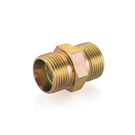
 Stainless Steel Metric Hydraulic Adapter
Size: M12X1.5—M45X2. Threaded size can be customized. Material: carbon steel. Material can be stainless steel304,316,316L. Surface treatment: Eco-friendly galvanized
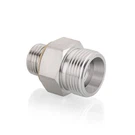
Add to Inquiry Stainless Steel NPT Hydraulic Adapter
Size: NPT1/8X27—NPT1-1/2X11.5. Threaded size can be customized. Material: carbon steel. Material can be stainless steel304,316,316L. Surface treatment: Eco-friendly galvanized
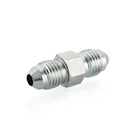
Add to Inquiry Stainless Steel BSP Hydraulic Adapter
Size: BSP1/8”X28—BSP2”X11. Threaded size can be customized. Material: carbon steel. Material can be stainless steel304,316,316L. Surface treatment: Eco-friendly galvanized
Add to Inquiry Stainless Steel JIC Hydraulic Adapter
Size: UNF7/16”X20—UNF1-7/8”X12. Threaded size can be customized. Material: carbon steel. Material can be stainless steel304,316,316L. Surface treatment: Eco-friendly galvanized
Add to Inquiry Stainless Steel NPT Hydraulic Bushing Adapter
Size: NPT1/8”X27—NPT2”X11.5. Threaded size can be customized. Material: carbon steel. Material can be stainless steel304,316,316L. Surface treatment: Eco-friendly galvanized
Add to Inquiry Stainless Steel BSP Hydraulic Bushing Adapter
Size: BSP1/8”X28—BSP2”X11. Threaded size can be customized. Material: carbon steel. Material can be stainless steel304,316,316L. Surface treatment: Eco-friendly galvanized
Add to Inquiry Hydraulic Adapter Fitting
Size: BSP, NPT, METRIC, UN. Threaded size can be customized. Material: carbon steel. Material can be stainless steel304,316,316L. Surface treatment: Eco-friendly galvanized
Add to Inquiry 3/4 To 1/2 Hydraulic Adapter
Size: BSP3/4”X14—BSP1/2”X14. Threaded size can be customized. Material: carbon steel. Material can be stainless steel 304,316,316L. Surface treatment: Eco-friendly galvanized
Add to Inquiry Sae Hydraulic Adapter
Size: UNF7/16”X20—BSP3/8”X19. Threaded size can be customized. Material: carbon steel. Material can be stainless steel 304,316,316L. Surface treatment: Eco-friendly galvanized
Add to Inquiry 06 To 12 Hydraulic Adapter Fitting
Size: UNF9/16”X18—UNF1-1/16”X12. Threaded size can be customized. Material: carbon steel. Material can be stainless steel 304,316,316L. Surface treatment: Eco-friendly galvanized
Add to Inquiry 1/2 Inch To 20 mm Hydraulic Adapter
Size: BSP1/2”X14. Threaded size can be customized. Material: carbon steel. Material can be stainless steel 304,316,316L. Surface treatment: Eco-friendly galvanized
Add to Inquiry 3 /4 -16 Hydraulic Adapter
Size: UNF3/4”X16. Threaded size can be customized. Material: carbon steel. Material can be stainless steel 304,316,316L. Surface treatment: Eco-friendly galvanized
Add to Inquiry

Stainless steel hydraulic adapters provide high strength, good conductivity, and excellent corrosion resistance. They are typically used in hydraulic applications where the fluids in a pipe system require protection, such as in the food, beverage, and pharmaceutical industries. These adapters securely connect hydraulic hoses to pipe, tubing, or hoses that have different thread types or sizes. They have two or more threaded ends and attach to compatible hydraulic hoses with a wrench, solvent welding, or soldering to create a seal.
Types of Metals Used to Manufacture stainless steel hydraulic adapters
Depending on the environment and the process they're involved in, hydraulic stainless steel hydraulic adapters may experience different degrees of corrosion and degrade over time. Considering the harsh working environments of hydraulic systems in heavy machinery or plant equipment, many have had to rely on stainless steel as a viable option for these fittings for longevity and shorter downtimes during emergency maintenance.
● Steel
The wide use of steel in industries is a testament to its importance. It's largely composed of iron and carbon that account for its characteristic strength and toughness. Additional metals, like zinc, copper, chromium, manganese, and molybdenum, give it other properties like corrosion resistance and durability.
Stainless steel is one such variant of steel comprising mainly of carbon, iron, nickel, and chromium. The additional chromium in its metallurgy provides it with corrosion-resistant properties. Here are some commonly used grades for manufacturing stainless steel hydraulic adapters.
● 304
The SAE 304, UNS 30400, and ASTM A276 are the common standards for this type of steel grade. It is the most commonly used grade of stainless steel, known as 18/8, throughout the industry. That's because its standards call for a minimum of 18% chromium and 8% nickel to be added during manufacturing.
It is easy to work with, giving the right combination of strength and flexibility that allows it to be rolled in sheets, formed into shape via presses, and used as stock for machining into final products. The zinc and chromium give it corrosion-resistance properties, forming an oxide layer on its surface to survive in harsh chemical environments. This also makes it easier to clean with tough chemicals, making it ideal for making sanitary stainless steel hydraulic adapters for the food industry.
● 316
Other grades of steel exist that can combat chloride corrosion. 316 stainless steel variants are the most commonly used after 304 grades. Although 1.5 times costlier than 304-grade steel, it provides excellent corrosion resistance for stainless steel hydraulic adapters.
Its chemical composition is similar to 304 steel, however, the additional element molybdenum deters chlorides from invading its surface and gives it thermal properties that make machining easier.
Hydraulic fittings play a pivotal role in ensuring the smooth operation of a hydraulic hose system, and stainless steel ranks among the most prevalent materials used in a variety of systems. Stainless steel hydraulic fittings are primarily used where the internal media or the external environment is corrosive, offering outstanding durability, strength and safety.
Durability and strength
Stainless steel is known for being very strong and durable when introduced to extreme-duty applications. The composition of the material allows stainless steel to become temperature resistant, which means it is safe to be used in high-temperature applications of up to 1112°F (600°C). However, most hydraulic hoses are only rated up to 212°F(100°C). Depending on the type of elastomeric material and number of spiral or braided wires, some specialty hoses can withstand up to 300°f (149°C)-- which is still well below the threshold of the fitting itself. However, there a certain specialty hose sleeves rated for 500°f (260°C) under continuous exposure and 2000°F (1093°C) for 15 to 20 minute intervals and even as high as 3000°F (1650°C) for limited exposure of up to 30 seconds.
Among other benefits, stainless steel excels by being corrosion resistant. In particular environments, stainless steel is one of the most robust materials compared to others such as carbon steel or brass. This is especially beneficial for the oil & gas, marine and construction industries for example, as their numerous applications demand resilience in harsh environments.
Reliability and longevity at high pressures
Stainless steel is one of the most reliable materials for hydraulic hose fitting applications. Its composition allows the material to last more than 50 years. Stainless steel not only offers a long service life and dependable performance, but also stands up to wear and tear without compromising the integrity of applications. Although stainless-steel fittings are often rated up to 10,000 psi, one must be careful in hose selection. There are multiple pressure classifications in the ISO standard for maximum hydraulic hose working pressure, which ranges from 500 to 8,000 psi, although there are many specialty hoses that can withstand 10,000 psi or above.
Low maintenance
Stainless steel hydraulic adapters are valued for their low maintenance qualities in applications with high temperature or corrosive conditions, reducing system6802-nwo-fg downtime in industries where a consistent and steady output is needed.
Stainless steel hydraulic adapters do not require an additional coating. While coatings can enhance the performance of alternative materials such as carbon steel, it is not required on stainless steel. This characteristic makes stainless steel hydraulic adapters low maintenance compared to other materials, particularly since some other types of fittings may require recoating to extend their service life after installation.
Common Applications for Stainless Steel Hydraulic Adapters
Hydraulic applications in the oil & gas and chemical processing market require stainless steel hydraulic adapters which are designed for demanding conditions. From salt spray on offshore rigs in the sea, to refineries, and the processing of caustic chemicals, stainless steel is the predominant choice of material in fittings and valves.
Whatever material is being transported, oil, various chemical combinations or other substances, stainless steel outperforms most other materials. The oil & gas, and chemical processing industries are naturally corrosive environments and can experience extreme temperatures and harsh conditions. That's why stainless steel is used throughout these markets. Other exotic materials such as Monel alloys are used in oil and gas exploration where components will be exposed to "down hole" environments of elevated temperature combined with high hydrogen sulfide concentrations. Monel is used in these so called "sour wells" as the conditions prove rapidly degrading to stainless steels. However, Monel is much more expensive than stainless and used only when conditions require.
The manufacturing and processing of foods and beverages, as well as alcoholic beverages, utilizes specialty manufacturing, processing, and packaging equipment that are required to withstand high temperatures and transportation of liquids through the system while staying hygienic. The equipment must also be easy to clean and disinfect during change over or before introducing a new product to the system. The cleaning process is vital to protecting against the growth of bacteria and other pathogens.
In order to withstand heat, resist pitting, cracking, potential corrosion and for ease of cleaning, stainless steel fittings, adapters and tubing are used when carrying food materials or beverages. Plus, stainless steel is achromatic to foods, so it does not affect the taste, smell or color of foods and beverages.
Equipment and components such as fittings used in the pharmaceutical industry often come into contact with high temperature, high pressure, and corrosive chemicals, and must also endure recurrent and intense cleaning treatments. According to the FDA: Equipment shall be constructed so that surfaces that contact components, in-process materials, or drug products shall not be reactive, additive, or absorptive so as to alter the safety, identity, strength, quality, or purity of the drug product beyond the official or other established requirements.
There are many other industries that rely heavily on stainless steel fittings and components, including textiles, water treatment plants, ship building & marine equipment, mining and more. There enhanced corrosion resistance extends the service life of equipment and the temperature ratings for 304 stainless of 800°F (427°C), or 316 stainless steel of 1,000°F (538°C) along with its toughness in harsh conditions makes stainless the ideal choice in many industries and applications. Pressure ratings of stainless steel hydraulic adapters are often rated to 10,000 PSI, and for specialty applications can be designed for up to 20,000 PSI.
What Makes Stainless Steel Hydraulic Adapters and Couplers Fail
When used correctly, stainless steel hydraulic adapters and couplers are unlikely to fail, but its worth taking extra care to avoid the following:


Improper installation: A poorly installed stainless steel hydraulic adapter can lead to leaks or even the complete failure of a whole hydraulic system. Over-tightening stainless steel hydraulic adapters beyond the recommended torque can cause damage to the stainless steel hydraulic adapter, leading to leaks. Don't be tempted to use tools for couplers designed to be tightened by hand. In addition, if a coupler is not properly aligned with the stainless steel hydraulic adapter this may also create stress and a risk of fatigue or damage.
Contamination: If dirt, dust, or other contaminants get into the hydraulic fluid, they can clog the coupler and prevent it from functioning properly. This is more of a potential issue for tool users out in the field and less so for factory-based hydraulic work-holding situations.
Impact damage: Physical damage to a coupler can cause it to become deformed, which can prevent it from operating correctly.
Vibration: Vibration over extended periods can cause stainless steel hydraulic adapters to loosen over time, leading to leaks or failure. Vibration can be caused by hydraulic pumps and cavitation within the hydraulic fluid.
Over-pressurization: If the pressure in the hydraulic system rises higher than what the coupler is designed to handle this may cause it to fail.
Corrosion: Over time, in harsh conditions, stainless steel hydraulic adapters can corrode due to exposure to moisture, chemicals, or other environmental factors. This has the potential to weaken the stainless steel hydraulic adapters which could lead to leakage or failure.
Fatigue: Repeated cycles of pressure and stress can cause fatigue in the stainless steel hydraulic adapters, leading to cracks and failure.
Wear and tear: Over time, stainless steel hydraulic adapters and couplers that include seals may become worn and therefore lose their ability to maintain a tight seal.
How Do You Choose the Stainless Steel Hydraulic Adapters for a Hydraulic Hose
The criteria for choosing the right stainless steel hydraulic adapters for hydraulic hoses are size, material, temperature, pressure, application, and assembly. The proper assessment of these criteria is critical to ensure the safety and reliability of the connections.
Size: When it comes to the size, the important measurements to consider are the internal and external diameters of the stainless steel hydraulic adapters. The diameters have to be compatible with that of the hydraulic hose. Fittings over or under-sized won't be sealed properly and cause the connection to fail or leak.
Material: Different materials have different properties, which affect and determine the compatibility with the fluid. As such, making sure that the fitting is compatible with both the hydraulic fluid and the working environment is critical. Determine both and choose between brass, aluminium, steel, or stainless steel.
Temperature: Aside from ensuring that the different materials that make up stainless steel hydraulic adapters are resistant to the operating temperatures, the type of fittings should also be considered.
Pressure: The amount of pressure the stainless steel hydraulic adapter is subjected to differ across varying industries and applications. Make sure that the fittings are rated for the pressure range required. Operating beyond the rated pressure may cause leaks and even danger to people in the working environment.
Application: Depending on the industry or application, the fittings could be used for either mixing or distributing. As such, stainless steel hydraulic adapters such as the t-shape and the cross-shape come into consideration.
Assembly: Hydraulic systems that require frequent connections and disconnections of the hose or tube should consider quick-connect fittings. For instance, hydraulic compression fittings can also remove the need to weld or solder the fitting. It uses a compression nut that tightens against the ferrule, creating a tight seal.
Permanence: Needing a permanent fitting or one that can be removed and changed frequently will affect the fitting style you choose. If this fitting is going to be changed often, a field attachable fitting will work just fine, but if you need something permanent and strong, using a crimping machine to crimp your fitting permanently is the perfect option.
Aside from this criteria, the hydraulic fluids used in the industry should also determine what type of coupling is best. Not all fittings are compatible with all hydraulic fluids. The primary hydraulic fluid types are petroleum-based, water-based or synthetic-based fluids.
FAQ
Q: Are hydraulic fittings stainless steel?
Q: What material is hydraulic adapter?
Q: What is stainless steel hydraulic adapter?
Q: When to use stainless steel hydraulic adapters?
Q: How do you keep stainless steel hydraulic adapters from rusting?
Q: How do you clean stainless steel hydraulic adapters?
Q: What is the preventive maintenance of stainless steel hydraulic adapter?
Q: How to understand stainless steel hydraulic adapters?
The simple 5-step procedure to identify stainless steel hydraulic adapters:
Step 1: Define the fitting type.
Step 2: Match port connections.
Step 3: Identify the sealing type.
Step 4: Detect the fitting design with the help of visual analysis.
Step 5: Identify the tread size.
Q: What is the difference between a hose fitting and stainless steel hydraulic adapter?
Q: What is the difference between a coupling and stainless steel hydraulic adapter?
While stainless steel hydraulic adapter comes in different size and connection. It can be customized according to system size and connection required. Standard hex bush fitting threaded end connection male size bigger than female size. Adapter can have female which is internal thread bigger than male external thread or equal size for both male and female thread.
Q: How do you make stainless steel hydraulic adapter?
Q: What is the purpose of a stainless steel hydraulic adapter?
Q: What are stainless steel hydraulic adapters called?
Q: Do you use teflon tape on stainless steel hydraulic adapters?
Q: How to install stainless steel hydraulic adapters?
Q: How to seal stainless steel hydraulic adapters?
Q: How do you keep stainless steel hydraulic adapters from rusting?
Q: How to choose stainless steel hydraulic adapters?
Q: Can you mix and match stainless steel hydraulic adapters?
Q: How do you tell stainless steel hydraulic adapters apart?
As one of the leading stainless steel hydraulic adapter manufacturers and suppliers in China, we warmly welcome you to buy stainless steel hydraulic adapter in stock here from our factory. All customized products are with high quality and competitive price. Contact us for free sample.
stainless steel fitting for hydropower, stainless steel fitting for hvac, stainless steel hydraulic fitting