
Latest Products



Contact Us
- Gujiabu, Hujie Village, Zhangting Town, Yuyao City
- kiccy@yytonghui.com
- +8615267877473
The factory was established in 1989, and started to do export trade in 2010, mainly in Europe and the United States market.
The factory can design products and process them according to customers, our advantage is that we can do customized products according to customers' drawings and provide free samples. High quality products, no burrs, smooth surface, galvanized products all pass salt spray test.
Why Choose Us?
High quality: We take pride in the craftsmanship of our products and ensure that each one meets our strict standards for quality. High quality products, no burrs, smooth surface, galvanized products all pass salt spray test.
Professional Team: The factory was established in 1989, and started to do export trade in 2010. Dedicated to strict quality control and attentive customer service, our experienced staff is always available to discuss your requirements and ensure complete customer satisfaction.
High quality service: Professional and thoughtful after -sales team, let you worry about us after -sales Intimate service, strong after -sales team support.
Custom service: We can do customized products according to customers' drawings and provide free samples.
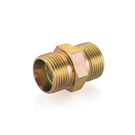
 Carbon Steel Metric Hydraulic Bulkhead
Size: Metric. Threaded size can be customized. Material: carbon steel. Material can be stainless steel 304,316,316L. Surface treatment: Eco-friendly galvanized
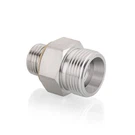
Add to Inquiry Metric Hydraulic Bulkhead Fittings
Size: Metric. Threaded size can be customized. Material: carbon steel. Material can be stainless steel 304,316,316L. Surface treatment: Eco-friendly galvanized
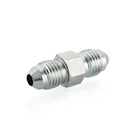
Add to Inquiry Carbon Steel JIC Hydraulic Bulkhead
Size: JIC 9/16”X18. Threaded size can be customized. Material: carbon steel. Material can be stainless steel 304,316,316L. Surface treatment: Eco-friendly galvanized
Add to Inquiry

Carbon steel hydraulic bulkheads are a type of fitting that is used to create a secure connection through a wall or partition. They are often used in plumbing or piping applications to create a watertight seal around the pipes as they pass through the wall, allowing for the pipes to be safely and securely installed in areas where they may be exposed to water or other liquids. In addition to their use in plumbing, carbon steel hydraulic bulkheads can also be found in a variety of other applications, including in construction of aquariums, hydroponic systems, fish farming, ponds, swimming pools, fuel tanks and other water-based environments.
Benefits of Using Carbon Steel Hydraulic Bulkhead
Strength and durability
Carbon steel hydraulic bulkheads are known for their high strength and durability. They are much stronger than other types of steel, and their durability makes them capable of withstanding extreme weather conditions without losing their strength.
Malleability
Carbon steel are highly malleable and easily molded into various shapes. This makes them ideal for use in manufacturing processes that require precision, especially when they need to be bent or shaped to fit specific requirements.
Good thermal conductivity
Carbon steel hydraulic bulkheads have good thermal conductivity, meaning they can conduct heat well. This property is because carbon steel has a lower melting point than other types of steel. The good thermal conductivity of carbon steel hydraulic bulkheads makes them ideal for use in applications where heat needs to be conducted away from sensitive components or areas.
Good electrical conductivity
Carbon steel hydraulic bulkheads also have good electrical conductivity, meaning they can conduct electricity well. This property is because carbon steel has a lower resistivity than other types of steel. The good electrical conductivity of carbon steel hydraulic bulkheads makes them ideal for use in electrical applications where a good conductor is required.
Corrosion-resistant
Carbon steel hydraulic bulkheads are also resistant to the corrosive effects of moisture and chemicals. This makes them ideal for construction projects requiring strong materials that can withstand exposure to moisture. Carbon steel hydraulic bulkheads can also be coated in protective layers to further resist corrosion and extend their lifespan.
Economical
Carbon steel hydraulic bulkheads are more economical than other steel bars because they are made with less expensive alloys. Carbon steel hydraulic bulkheads are typically made with a lower percentage of alloying elements, such as manganese, chromium, and nickel, which makes them less expensive to produce.
Recyclable
Carbon steel hydraulic bulkheads are 100% recyclable, making them an eco-friendly material. They are also reusable and can be used in other construction or manufacturing projects. This makes them a sustainable option that supports circular economy practices.
Carbon steel can be classified into three types based on their carbon content and properties: Low carbon steel, medium carbon steel, and high carbon steel.
● Low carbon steel: Low carbon steel, also known as mild steel, contains a carbon content of less than 0.3%. It is the most commonly used type of carbon steel due to its low cost, ease of fabrication, and excellent weldability. Low carbon steel is soft, ductile, and has good formability, making it suitable for a wide range of applications, including automotive parts, construction, and structural components.
● Medium carbon steel: Medium carbon steel is a type of carbon steel that contains a carbon content between 0.25% and 0.60%. This type of steel offers a good balance of strength, toughness, and ductility, making it suitable for use in a wide range of applications. Medium carbon steel is commonly used in the manufacture of machinery parts, automotive components like gears, axles and crankshafts, railway tracks and train wheels. It can be heat-treated to improve its strength and hardness, and it can also be machined and welded relatively easily. Medium carbon steel is stronger than low carbon steel but not as hard as high carbon steel, making it a versatile and cost-effective option for many industrial applications.
● High carbon steel: High carbon steel is a type of carbon steel that contains a carbon content between 0.60% and 1.0%. This type of steel is known for its high strength, hardness, and wear resistance, making it suitable for use in applications that require a durable and long-lasting material. High carbon steel is commonly used in the manufacture of tools, knives, springs, and other components that require high strength and hardness. However, it is also more brittle than other types of steel, which means that it can crack or break under stress if not properly heat-treated. High carbon steel can be heat-treated to improve its strength and hardness, and it can also be machined and welded with appropriate techniques. While high carbon steel is often more expensive than other types of steel, its durability and longevity can make it a cost-effective option in the long run for certain applications.
In addition to these three types of carbon steel, there are also other variations that have additional alloying elements added to improve their properties. For example, alloy steels may contain additional elements such as chromium, nickel, or molybdenum to enhance their strength, hardness, or corrosion resistance.
The factors that are to be considered for purchase of carbon steel hydraulic bulkheads are as follows:
● While purchasing carbon steel hydraulic bulkheads in bulk, you should determine the thread size of fitting.
● As carbon steel hydraulic bulkheads are used as distribution outlets in piping systems, determining the diameter of the carbon steel hydraulic bulkhead is very important.
● The size of the fitting is also an important consideration before buying carbon steel hydraulic bulkheads.
● The quality and strength of the material used for making the fitting is also an important consideration.

Applications of Carbon Steel Hydraulic Bulkheads
Carbon steel hydraulic bulkheads find application in a wide range of industries:
Industrial processes
In industrial settings, carbon steel hydraulic bulkheads are crucial for connecting pipes and tanks, especially in chemical processing and manufacturing.
Plumbing
They are used to connect pipes through walls or floors, maintaining the integrity of plumbing systems.
Aquariums
Carbon steel hydraulic bulkheads are used to create watertight connections in aquariums for water circulation and filtration systems.
Automotive
Carbon steel hydraulic bulkheads can be found in fuel lines and brake systems in vehicles.
Agriculture
These fittings are used in irrigation systems and liquid storage tanks on farms.
Marine
Carbon steel hydraulic bulkheads are vital for maintaining the watertight integrity of ships and boats.
How to Install Carbon Steel Hydraulic Bulkheads
To set the fitting, it must be inserted through the newly cut hole from the inside of the tank so the gasket and fitting body (the flat, solid end) are on the inside. The carbon steel hydraulic bulkhead must be placed into the hole so the locknut and thread side is available on the tank exterior so plumbing connections can be made.
Sometimes tank access can make it difficult to insert fittings from the tank interior. Often, this is due to a small manway size and/or an installation location that's out of arm's reach from the tank opening.
In these cases, use a weighted string, feed it through the tank manway or lid and thread it through the newly cut hole, then guide the fitting along the string and into position.
This part of the process may be easier if done with another person who can perhaps grab the weighted string using a pole, hook, or other means and help thread it through the newly cut hole. The same procedure is recommended for bolted carbon steel hydraulic bulkheads. Note that this is the most difficult part of the fitting installation process.
With the fitting in place and threaded side out, use the locknut that comes with the fitting and tighten it to set the bulkhead. It is the locknut that keeps the bulkhead in place. Locknuts install on the outside of the water tank. Install a locknut by placing it on the threads and turn-tighten by hand.
When tightening, do not use any tools as it's important not to overtighten the fitting. Doing so can damage the gasket, fitting, or even the tank wall. When a locknut starts to feel secure and resist further movement, perform another quarter turn to one-half turn. This should be all that's needed to secure the fitting without leaking.
Thread tape is not recommended for locknuts during fitting installation. Thread tape is recommended however when connecting valves or plumbing to the carbon steel hydraulic bulkhead after installed.
On bolted style fittings, align the fitting body with the bolt pilot holes, add the face plate, then add and hand-tighten the bolts to secure the fitting in place. Now, the four lock bolts need to be completely tightened to secure the tank fitting seal. It's best if they are tightened in a crisscross pattern. Make sure not to overtighten as it can place strain and bulge the gasket which can lead to a leak.
The final step in fitting installation is to check the seal. Perform a water test prior to making any extended plumbing connections to guarantee your new bulkhead does not leak. To do so, fill the tank up to fitting level and check for water coming from around the seal. If a leak develops, loosen the locknut just enough to rotate the entire bulkhead in a clockwise turn then retighten the locknut. If a leak develops on a bolted bulkhead, check the tightness of the bolts.
How to Identify Your Carbon Steel Hydraulic Bulkhead Measurements

First, determine if you are working with inch or standard fasteners by identifying the standard associated with your carbon steel hydraulic bulkhead or by looking at carbon steel hydraulic bulkhead the top.
If you are unable to determine the measurement system, you'll need to record the OD in both inches and millimeters.
OD in inches and millimeters.
Measure an inch of the thread length and count the number of threads within the inch to determine the TPI.
Measure the distance between threads in millimeters to determine the thread pitch.
Using the OD measured in inches and the TPI, assemble the standard version of your measurement.
Using the OD measured in millimeters and the thread pitch, assemble the metric version of your measurement.
For more accurate measurements, consider investing in inch and metric thread gauges. These small tools look like pocket knives and hold fans of blades with different sized notches. The notches correspond to thread sizes, which are marked on the blade. Press the threads of your part against the different blades until you find the blade that nestles perfectly on the threads. This will not only tell you whether your part is an inch or metric part, but it will also narrow down the exact TPI or thread pitch.
FAQ
Q: How do I know if my carbon steel hydraulic bulkheads are JIC?
Q: How do I identify a carbon steel hydraulic bulkhead?
Q: How tight should hydraulic fittings be?
Q: What hydraulic fitting do I need?
Q: Should you use thread tape on hydraulic fittings?
Q: How do you seal a carbon steel hydraulic bulkhead?
Q: What are the benefits of using carbon steel hydraulic bulkheads?
Increased strength: carbon steel hydraulic bulkheads are made from medium carbon steel and are heat treated to increase their strength, making them suitable for use in applications where a higher level of strength is required.
Durability: carbon steel hydraulic bulkheads are resistant to wear and tear, making them suitable for use in applications where the fasteners will be subjected to repeated loading and unloading.
Corrosion resistance: carbon steel hydraulic bulkheads are coated with a protective finish to help prevent corrosion, making them suitable for use in outdoor or high-moisture environments.
Q: What are the types of carbon steel hydraulic bulkhead?
Q: Why are carbon steel hydraulic bulkheads left-hand thread?
Q: What connects to a carbon steel hydraulic bulkhead?
Q: What is the function of carbon steel hydraulic bulkhead?
Q: What is carbon steel hydraulic bulkhead?
Q: How to install a carbon steel hydraulic bulkhead with no access to the inside of the tank?
Q: Where are carbon steel hydraulic bulkheads used?
Q: How do you size a carbon steel hydraulic bulkhead?
The hole size is the diameter of the external threads. It would help if you had this because that is the hole you will need to cut out of your tank.
Q: What is the most common carbon steel hydraulic bulkhead?
Q: What does a carbon steel hydraulic bulkhead require to secure it?
Q: How to connect carbon steel hydraulic bulkhead?
Q: How do you use a carbon steel hydraulic bulkhead?
Q: Where does the gasket go on a carbon steel hydraulic bulkhead?
As one of the leading carbon steel hydraulic bulkhead manufacturers and suppliers in China, we warmly welcome you to buy carbon steel hydraulic bulkhead in stock here from our factory. All customized products are with high quality and competitive price. Contact us for free sample.
hydraulic bulkhead for knowledge transfer, hydraulic bulkhead for diagnosis, steel hydraulic piston